


Concrete longevity depends heavily on how stress is managed within the slab over time. Proper cutting plays a critical role in controlling that stress and guiding how concrete responds to movement, temperature changes, and moisture. In Alberta conditions, poor cutting decisions often lead to premature cracking and surface failure. At Cutting Edge Concrete, cutting is treated as a structural control method rather than a cosmetic step. This article explains how proper cutting extends concrete lifespan and how improper methods shorten it.
Why Concrete Needs Controlled Cutting
Concrete shrinks as it cures and continues to expand and contract as temperatures change. These movements create internal stress that must be released in a controlled way.
Without planned cuts, concrete relieves stress randomly. This results in cracks forming where the slab is weakest rather than where movement is intended. Controlled cutting creates predictable relief points that allow the slab to move without compromising its overall integrity.
The Role of Expansion Joints in Crack Prevention
Expansion joints separate concrete into sections that can move independently. These joints absorb stress caused by thermal expansion, ground movement, and moisture changes.
When expansion joints are missing, shallow, or poorly spaced, stress accumulates within the slab. Over time, this leads to uncontrolled cracking, joint breakdown, and uneven wear. Proper joint placement reduces stress concentration and helps concrete age uniformly.
How Saw Cutting Improves Structural Integrity
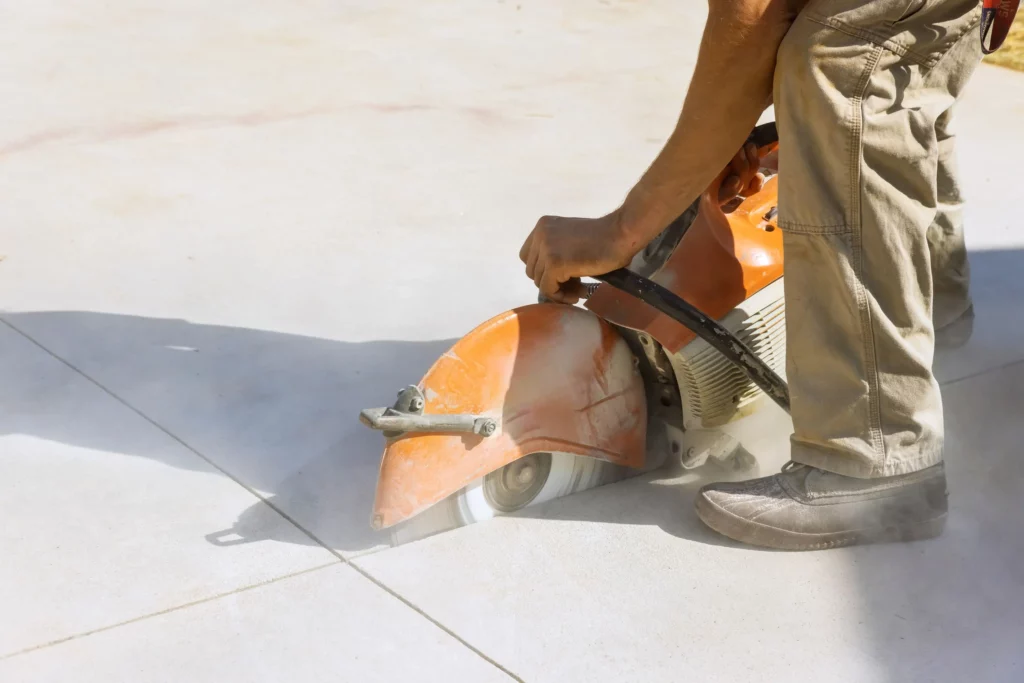
Saw cutting introduces clean, precise joints at specific depths and locations. These cuts intentionally weaken the concrete along a controlled line so that cracks form where planned.
Correct saw cutting improves structural integrity by ensuring stress releases through joints instead of through the slab surface. Timing also matters. Cuts made too late often fail to control cracking because stress fractures have already developed.
Drainage Control Through Proper Cutting
Concrete that sheds water lasts longer than concrete that traps it. Proper cutting helps maintain surface consistency and slope, which supports drainage across the slab.
When slabs crack randomly, low points form and water collects. Standing water accelerates deterioration through freeze thaw cycles and surface erosion. Controlled cutting reduces uneven movement and helps preserve drainage patterns that protect the concrete long term. This approach is standard practice for experienced concrete cutting professionals working in Alberta conditions.
The Impact of Reinforcement Steel on Cutting Accuracy
Reinforcement steel strengthens concrete but requires careful coordination during cutting. Improper cutting can damage reinforcement or create stress points where steel and concrete interact poorly.
Professional cutting accounts for rebar placement and slab thickness. Proper depth and spacing protect reinforcement while still allowing concrete to move as intended. Ignoring reinforcement during cutting often leads to weakened structural performance and shortened service life.
How Improper Cutting Shortens Concrete Lifespan
Improper cutting creates problems that compound over time. Shallow cuts fail to control cracking. Poor spacing concentrates stress. Late cuts allow fractures to form before joints exist.
These issues often result in:
- Random cracking outside joint lines
- Increased moisture penetration
- Accelerated surface wear
- Higher repair and replacement frequency
Once these failures begin, correcting them becomes more complex and costly.
How Professional Concrete Cutting Supports Long Term Durability
Professional concrete cutting combines planning, timing, depth control, and structural awareness. This approach ensures concrete moves predictably rather than failing unpredictably.
When joint layout, saw cutting, and reinforcement considerations align, concrete maintains its structural integrity for decades instead of years. For questions about cutting strategy, joint placement, or existing cracking concerns, property owners can request technical guidance to assess conditions before damage progresses.